
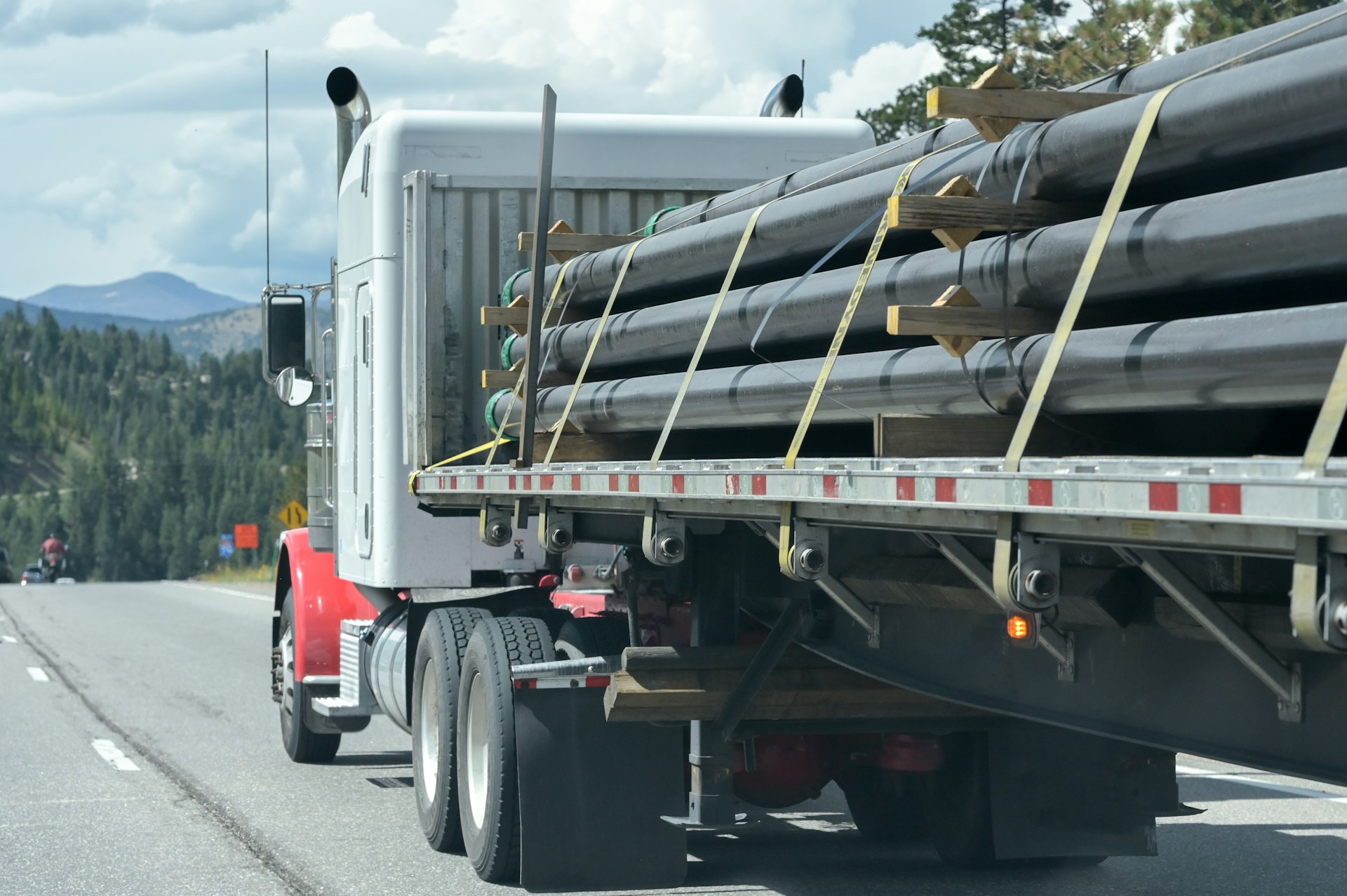
Accidents involving falling or improperly secured cargo can result in serious, and often catastrophic, injuries. Whether debris falls from a commercial truck onto a highway or unsecured materials shift during transport, these incidents raise complex questions of liability. Determining who is responsible is rarely straightforward, as multiple parties may be involved in the loading, securing, transporting, and maintaining of cargo.
In Ontario, personal injury claims arising from falling cargo accidents require a careful analysis of statutory obligations, common law negligence principles, and industry standards.
The Risks Associated with Falling Cargo
Falling cargo incidents can occur in a wide range of contexts, including commercial trucking, construction transport, and private vehicle use. Common scenarios include unsecured loads spilling onto highways, debris dislodging from dump trucks, and improperly fastened equipment falling during transit.
These accidents can have severe consequences. Motorists may collide with fallen objects, swerve to avoid debris and cause secondary accidents, or suffer direct impact injuries. In many cases, the sudden and unpredictable nature of falling cargo leaves little opportunity for avoidance. Given the potentially devastating outcomes, Ontario law imposes strict duties on those responsible for transporting goods.
Legal Framework Governing Cargo Securement in Ontario
In Ontario, cargo securement is governed by a combination of legislation and regulatory standards. The Highway Traffic Act and its associated regulations set out requirements for ensuring that loads are properly secured to prevent shifting, leaking, or falling during transport.
Commercial carriers are also subject to the National Safety Code (NSC) standards, which provide detailed guidelines on cargo securement practices. These standards address issues such as load distribution, tie-down requirements, and inspection protocols.
Failure to comply with these legal obligations can constitute evidence of negligence and may support a finding of liability in a personal injury claim.
Identifying Potentially Liable Parties
One of the defining features of falling cargo cases is the potential involvement of multiple parties. Liability is not always limited to the driver of the vehicle from which the cargo fell.
The Driver
Drivers have a direct responsibility to ensure that their load is secure before and during transit. This includes conducting pre-trip inspections and monitoring the load throughout the journey.
If a driver fails to take reasonable steps to secure cargo or ignores warning signs of instability, they may be found negligent.
The Vehicle Owner
In many cases, the owner of the vehicle (often a commercial trucking company) may also be held liable. Under Ontario law, vehicle owners can be vicariously liable for the negligence of drivers operating their vehicles with consent.
This means that even if the driver is primarily at fault, the company may share responsibility for damages.
The Cargo Loader
Responsibility may also extend to the party that loaded the cargo. Improper loading practices, such as uneven weight distribution or inadequate securing methods, can create dangerous conditions.
If a third-party loader was responsible for securing the cargo, they may be liable if their negligence contributed to the accident.
The Shipper or Manufacturer
In some cases, the shipper or manufacturer of the goods may bear responsibility. For example, if cargo was packaged in a manner that made it inherently unstable or unsafe for transport, liability may arise.
Similarly, defective containers or securing equipment can give rise to product liability claims.
Proving Negligence in Falling Cargo Cases
To succeed in a personal injury claim, the plaintiff must establish that the defendant owed a duty of care, breached that duty, and caused the plaintiff’s injuries.
In falling cargo cases, the duty of care is generally clear: those involved in transporting goods must take reasonable steps to ensure that cargo does not pose a danger to others The key issues typically revolve around breach and causation.
Breach of the Standard of Care
A breach may be established by demonstrating that cargo was not properly secured in accordance with legal or industry standards. Evidence may include:
- Inspection reports
- Photographs or video footage of the scene
- Witness testimony
- Expert opinions on proper cargo securement practices
Non-compliance with statutory requirements, such as those under the Highway Traffic Act, can be particularly persuasive in establishing a breach.
Causation
Causation requires showing that the falling cargo directly led to the plaintiff’s injuries. This may involve reconstructing the accident and addressing issues such as:
- Whether the cargo fell due to improper securement
- Whether the plaintiff’s actions contributed to the accident
- Whether other intervening factors were present
Accident reconstruction experts are often retained to provide detailed analyses in these cases.
Apportionment of Liability
Where multiple parties are found to have contributed to the accident, Ontario courts may apportion liability among them. This means that each defendant is responsible for a percentage of the damages based on their degree of fault.
For example, a court may find that:
- The driver failed to inspect the load
- The loader improperly secured the cargo
- The trucking company failed to implement adequate safety protocols
Each party may then be assigned a portion of liability, and the plaintiff can recover damages accordingly. This multi-party framework underscores the importance of identifying all potentially responsible parties early in the litigation process.
Insurance Considerations
Insurance coverage plays a critical role in falling cargo claims, particularly where commercial vehicles are involved. Trucking companies are typically required to carry substantial liability insurance, which may be available to compensate injured parties.
However, disputes can arise regarding coverage, particularly where multiple policies are engaged. For example:
- The driver’s personal insurance
- The trucking company’s commercial policy
- The loader’s liability insurance
Determining which policy applies, and to what extent, can be complex and may require legal intervention.
Evidence Preservation and Early Investigation
Timely evidence preservation is crucial in falling cargo cases. Key evidence may be lost or altered if not secured promptly, including:
- Vehicle inspection records
- Maintenance logs
- Cargo loading documentation
- Surveillance or dashcam footage
Early investigation allows counsel to identify responsible parties, preserve critical evidence, and build a strong case. In some cases, expert inspections of the vehicle and cargo securement systems may be necessary to determine the cause of the failure.
The Role of Expert Evidence
Expert evidence is often central to falling cargo claims. Experts may be retained to address issues such as:
- Proper cargo securement techniques
- Compliance with industry standards
- Accident reconstruction
- Mechanical or equipment failures
These opinions can help the court understand complex technical issues and assess whether the defendants met the required standard of care.
Compensation in Falling Cargo Accidents
Injuries resulting from falling cargo accidents can be severe and life-altering. Plaintiffs may be entitled to compensation for a range of damages, including:
- Pain and suffering
- Medical and rehabilitation expenses
- Loss of income and earning capacity
- Cost of future care
In catastrophic cases, damages may be substantial, particularly where long-term care or permanent disability is involved.
Ontario courts aim to place plaintiffs in the position they would have been in had the accident not occurred, to the extent that monetary compensation can achieve that goal.
Contact Campbell Litigation in Kitchener-Waterloo for Modern Personal Injury Services
If you have been injured in an accident caused by falling or unsecured cargo, you may be entitled to compensation. These claims can be complex, often involving multiple parties, competing insurance policies, and technical evidence related to cargo securement and transportation standards.
Richard Campbell of Campbell Litigation has extensive experience handling motor vehicle accident claims, including those involving commercial trucks and improperly secured loads. We work diligently to identify all responsible parties, preserve critical evidence, and build strong cases supported by expert analysis. Contact us online or call 519-886-1204 for a confidential consultation and let us help you pursue the compensation you deserve.